
E-PATH tool Web Applications
DiemDesk
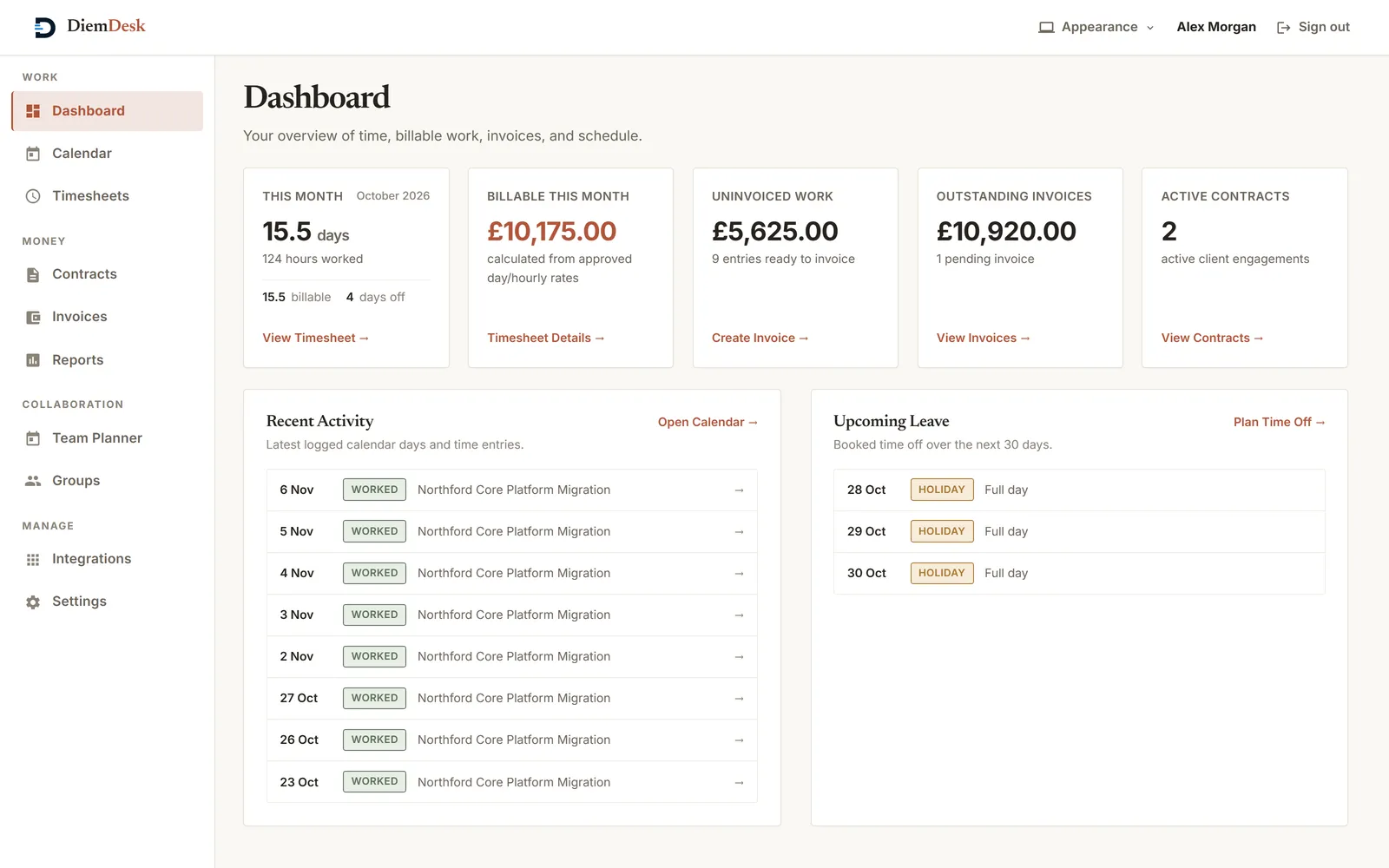
A time, contract and invoicing application for contract work, with rate derivation you can audit and two-way FreeAgent sync.
- Status
- In active use
- Year
- 2026
The problem
Contract work generates a chain of small, error-prone steps: record the days, apply the rate that was in force on each of those days, work out what is billable, notice the days that were missed, raise the invoice, and then key the same information into the accounting system again. Spreadsheets handle the first step and none of the rest.
The solution
An application that models contracts, effective-dated rates, working patterns and leave, then derives earnings deterministically from them — showing the derivation rather than just the total. It flags anomalies such as expected working days with no recorded time, and it connects to FreeAgent so clients, timesheets and invoices move between the two systems instead of being retyped.
Technical implementation
An E-PATH tool for running the administrative side of contract work — the days, the rates, the invoices and the accounting system — as one system rather than four.
Technical implementation
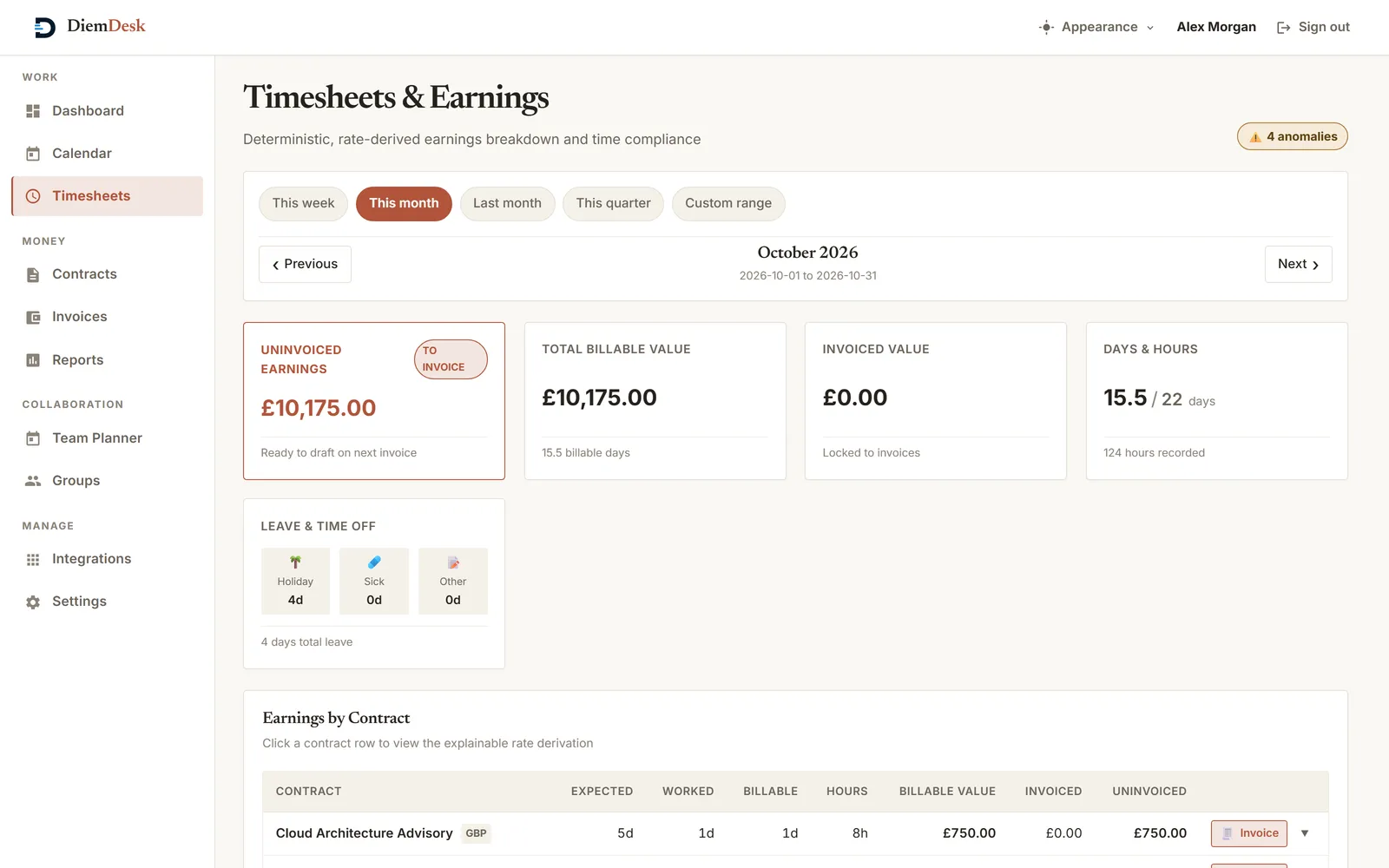
Rates are effective-dated, and the maths is explainable. A contract does not have a rate, it has a rate that was true over a period, and possibly a different one after that. Earnings are derived from the contract, the working pattern and the rates in force on each individual day, and the breakdown can be opened up to show how a figure was reached. “Deterministic, rate-derived” is the design goal: the same inputs always produce the same number, and that number can be justified to whoever is paying it.
Anomaly checks run against the calendar. The system knows which days were expected to be working days, so it can flag the ones with no recorded time rather than silently under-billing. Each flag links straight to the day in the calendar to be resolved.
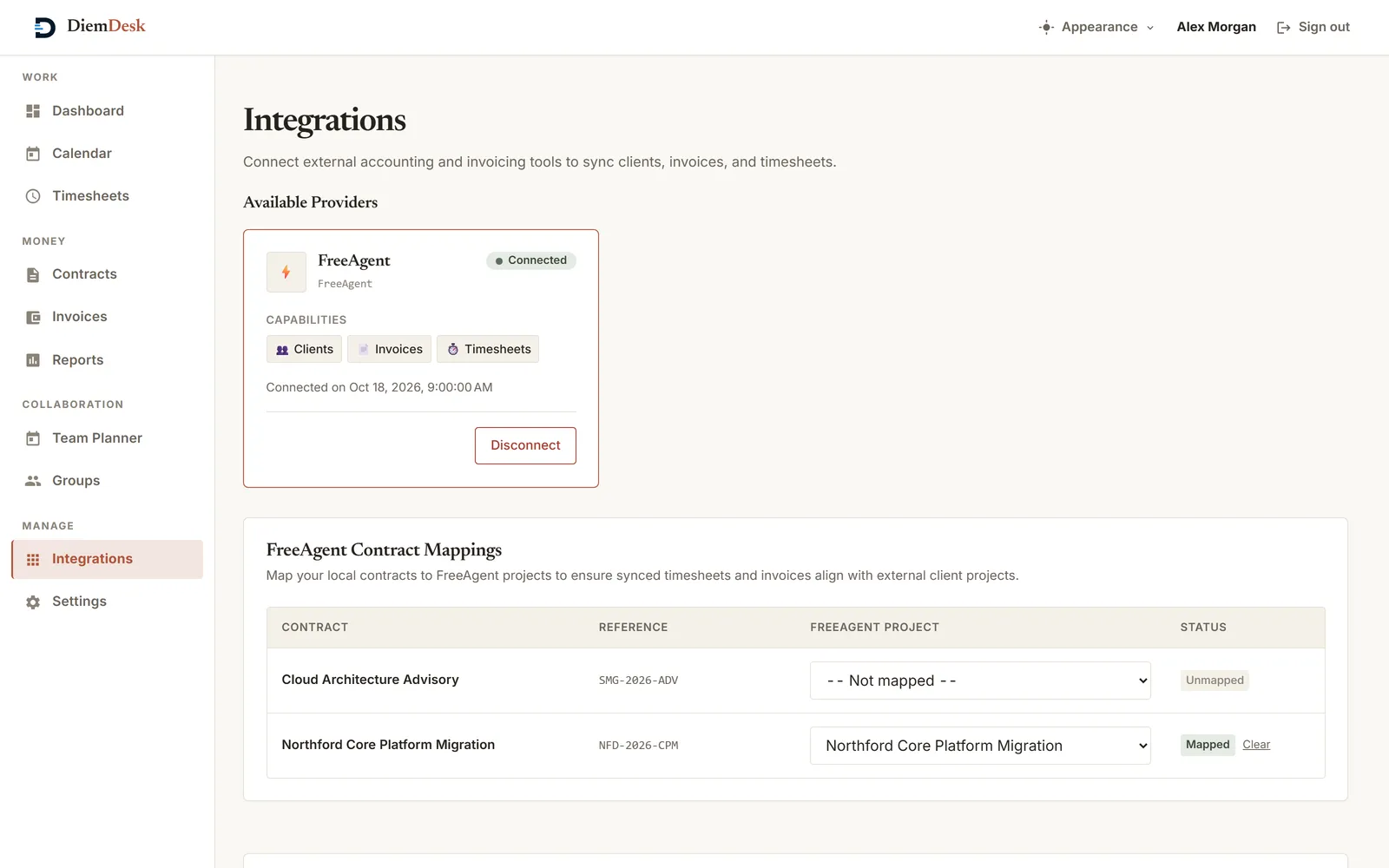
FreeAgent integration, both directions. An OAuth connection exposes clients, invoices and timesheets. Local contracts are mapped to FreeAgent projects so that synced data lands against the right client, and timesheet sync links existing timeslips first, then previews the remaining changes before anything is pushed. The preview step matters: an accounting system is not somewhere to discover that a sync did the wrong thing.
Multi-user from the start. Groups, invitations and a team planner showing who is working, on leave or unavailable across the week — so the unit of planning is the whole group, not one person with a spreadsheet.
Around those: a calendar for logging days, contract management with working-day patterns, invoice generation from uninvoiced work, reporting, and light/dark theming.
It shares a problem space with E-PATH’s accounting automation work — the point where time, billing and bookkeeping meet is where the manual effort collects, and it is the same place both projects attack.
Outcome
In active use for E-PATH's own contract work.
Screenshots
Next project
Engineering and automation of repeatable Azure application environments for a US enterprise client, covering infrastructure as code, application deployment, CI/CD, databases and cloud services.
Something similar in mind?
Describe the problem and you will get a straight answer about whether it is something E-PATH can help with.